Why I sometimes deliberately break images
On fragmentation, imperfection and the difficult decision of when an image has become too beautiful.
When harmony becomes a boundary
Sometimes I look at an image and think: it is beautiful.
And that is exactly the problem.
Not because I reject beauty.
But because I feel it has already said everything before I have even begun to look more closely.
The composition works. The colours harmonise. Everything feels balanced.
And yet something is missing.
I cannot always explain that feeling straight away.
But I have learned to pay attention to it.
A beautiful image has a particular power to persuade.
It seems to tell us that everything is in its place.
But I am increasingly interested in the moments when that order no longer works.
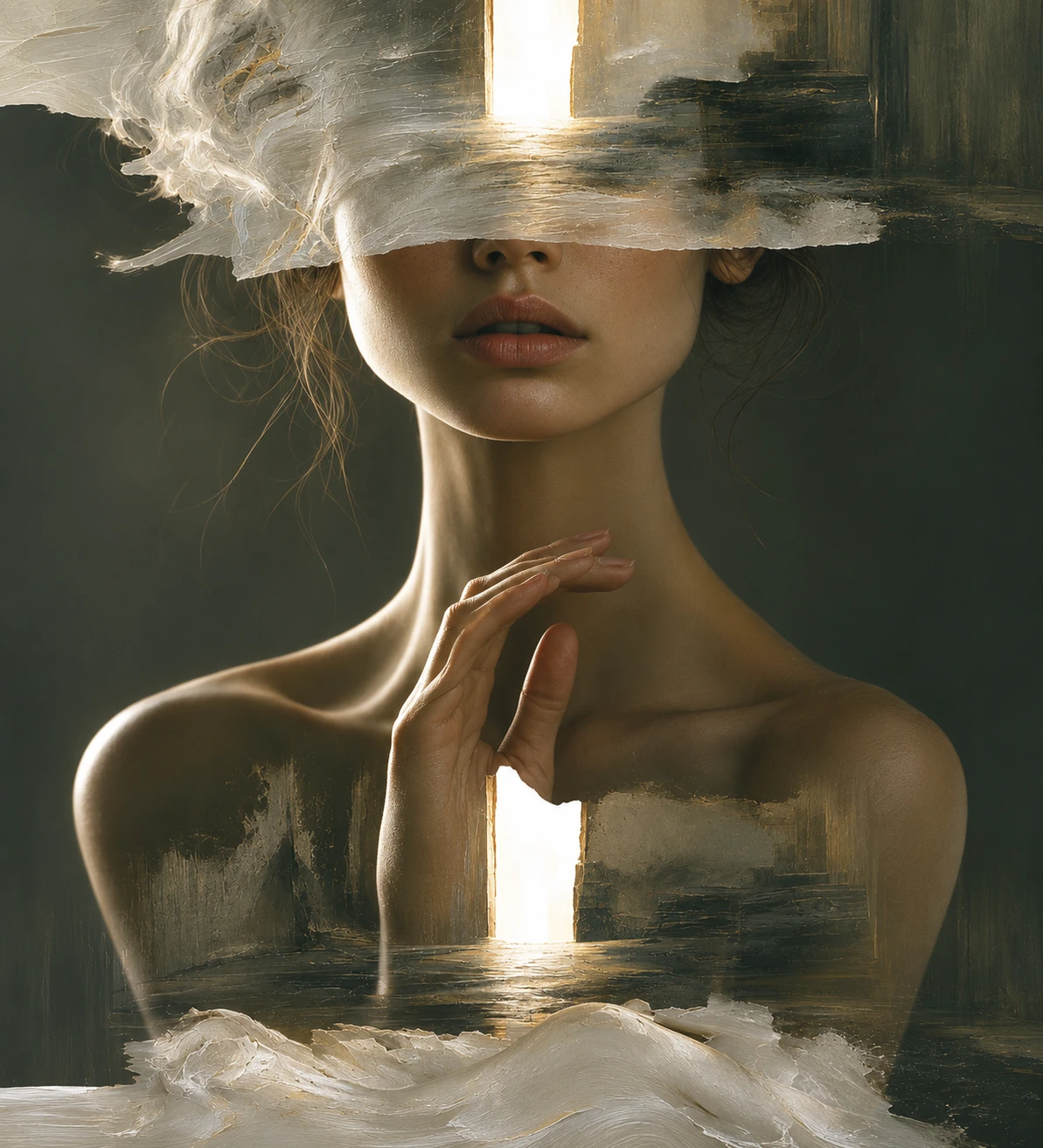
When a face loses its familiar structure.
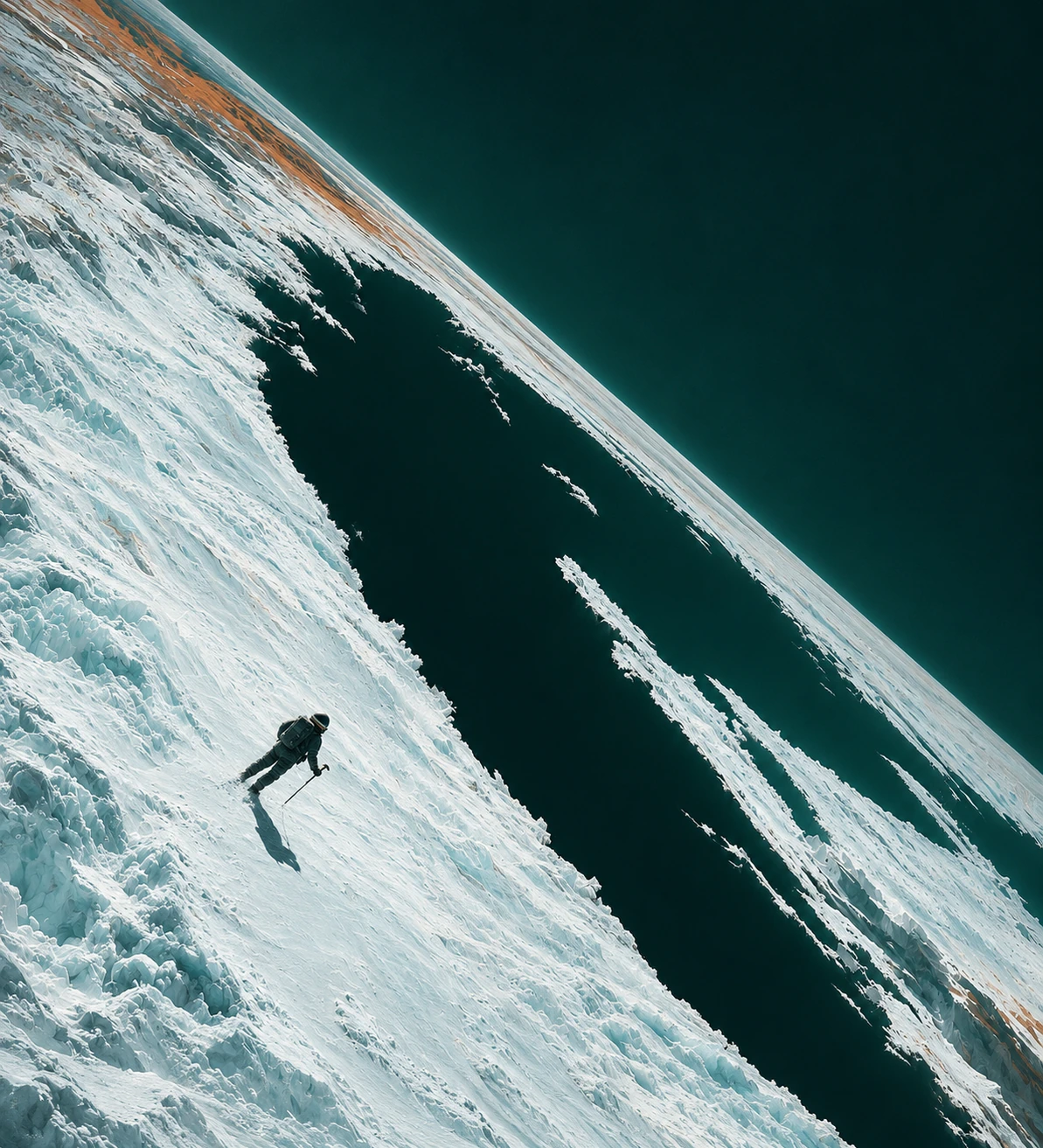
When an image seems to hold several realities at once.
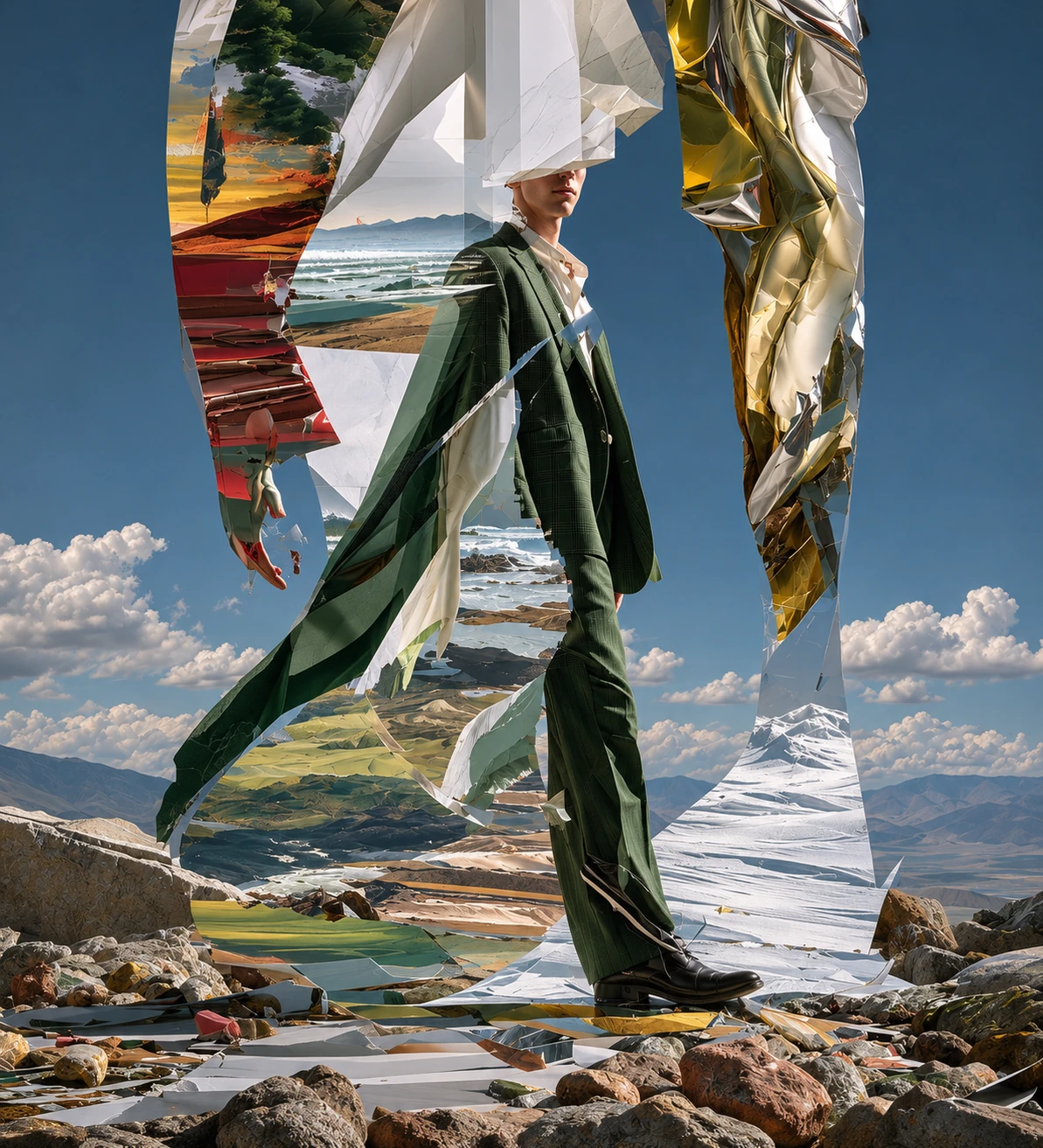
When a fragment takes on a new meaning because its original context has disappeared.
Sometimes I therefore begin to change something even though the result is already convincing.
I shift parts of a figure. I layer planes. I let structures run into one another or disappear.
Not every one of these interventions makes the image better.
Sometimes I lose something that I later miss.
But that risk is exactly what interests me.
The beauty of the mistake
We often think of mistakes as something that needs to be corrected.
In a creative process, however, they can have a different value.
An unexpected shift can open up a new perspective.
A structure that appears damaged can suddenly express something that a perfectly smooth surface could not convey.
That does not mean that every mistake is automatically artistically interesting.
Chance, too, needs to be selected.
I decide which disruption should remain and which merely distracts.
For me, this does not contradict artistic control.
It is another form of it.
What happens when the familiar disappears?
A face is one of the things we recognise especially quickly.
We look for emotion, personality and meaning in it.
But as soon as parts are missing or displaced, our perception changes.
We try to restore what is familiar.
We mentally fill in what is no longer visible.
Perhaps this also reveals something about us.
We want to recognise connections. We want to understand. We want things to be whole.
But not everything in life can be put back together completely.
Some memories remain fragmentary.
Some experiences contradict one another.
And sometimes there is no single, unambiguous version of who we believe ourselves to be.
When is a work finished?
Perhaps this is the most difficult question.
Not whether I can still add something.
But whether I should still change something.
A work can become stronger through one more intervention.
But it can also lose exactly what made it special.
That is why my work is not only about creating new images.
It is also about pausing.
Going back.
Rejecting.
And sometimes deciding not to correct an imperfection any further.
Perhaps I do not destroy the image. Perhaps I only remove what prevents me from seeing something else in it.