The aesthetics of expectation
We learn early how to behave in different situations, how we wish to appear and which roles seem expected of us. With time, these rules become so familiar that we may perform them without feeling that we are playing a part.
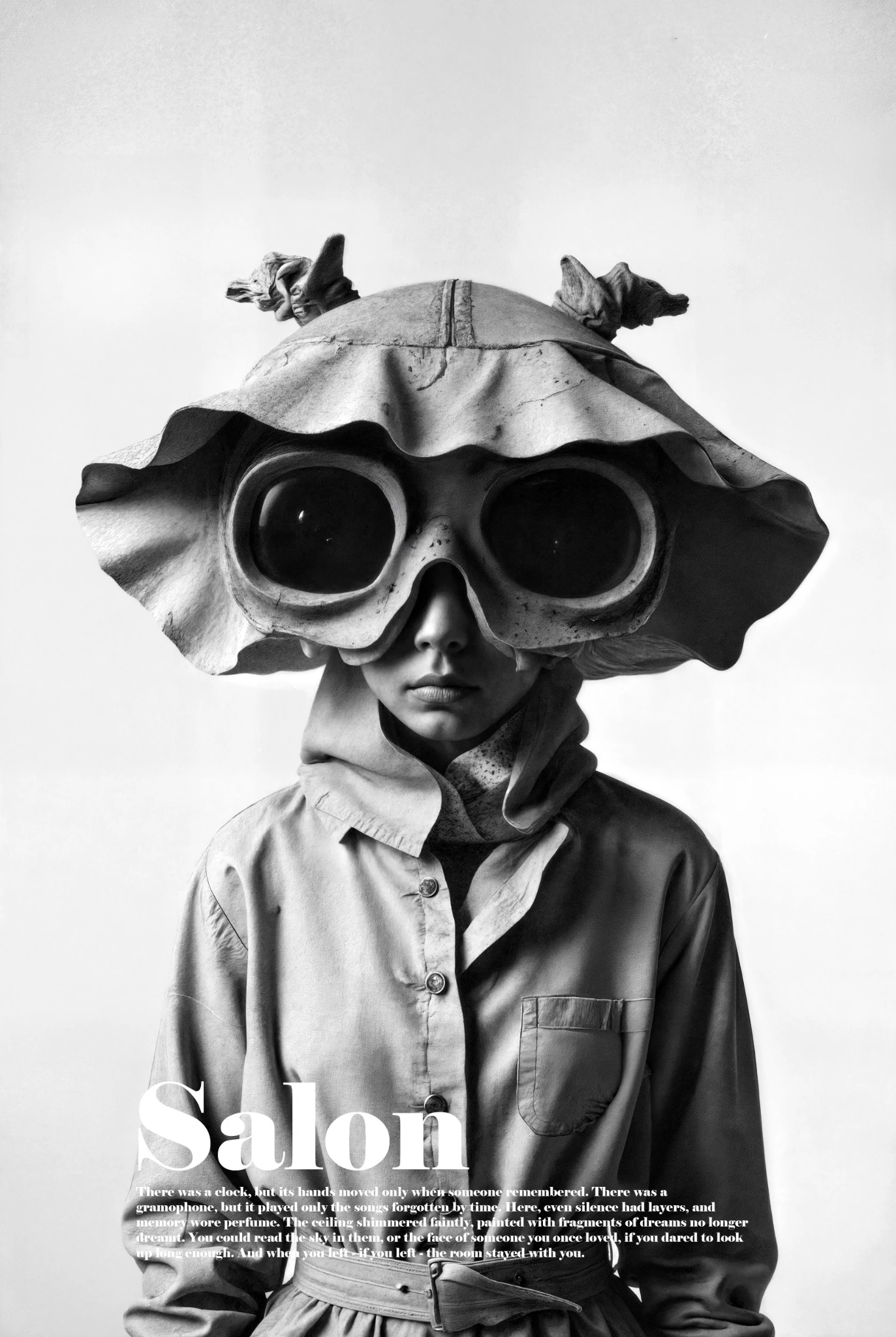
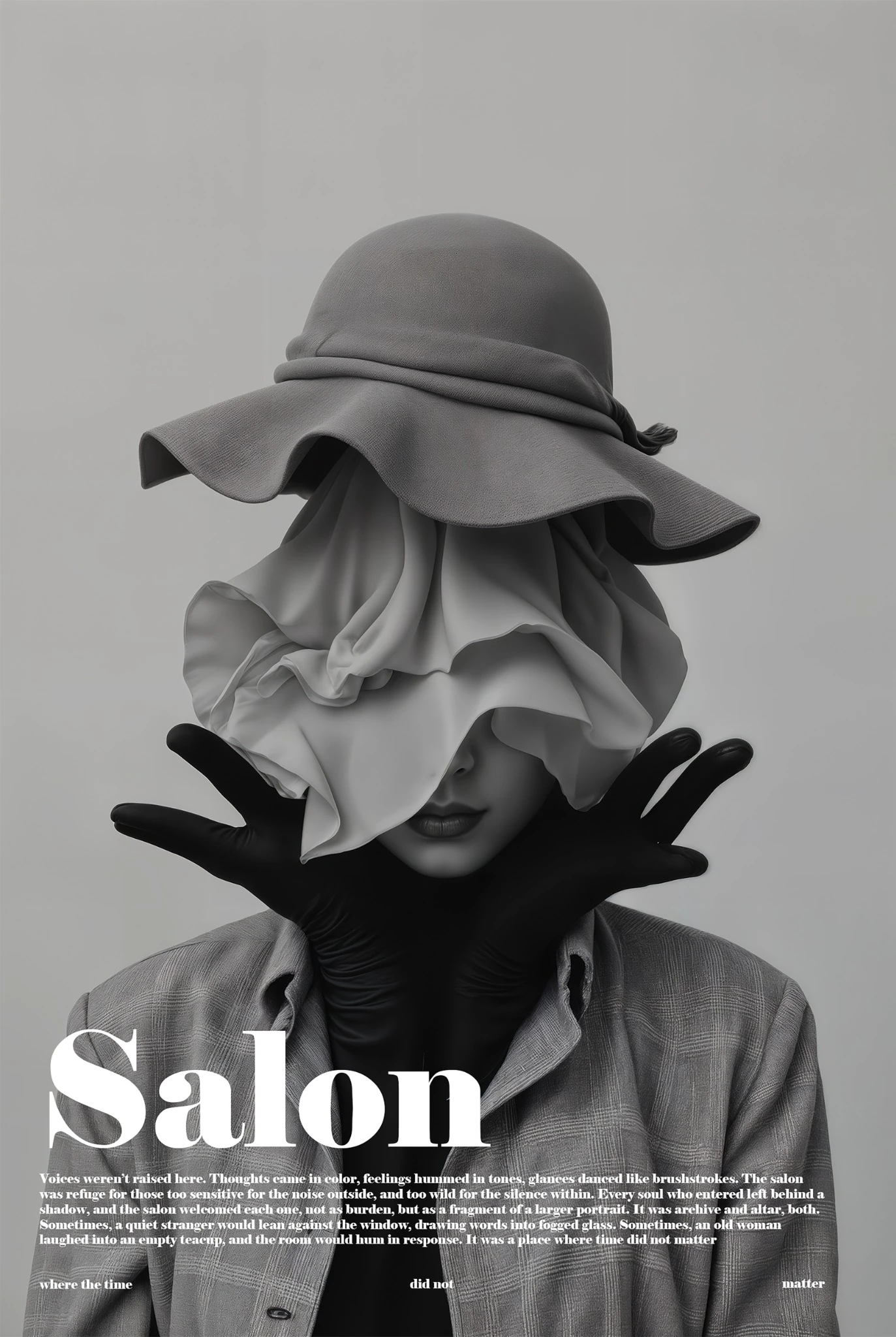
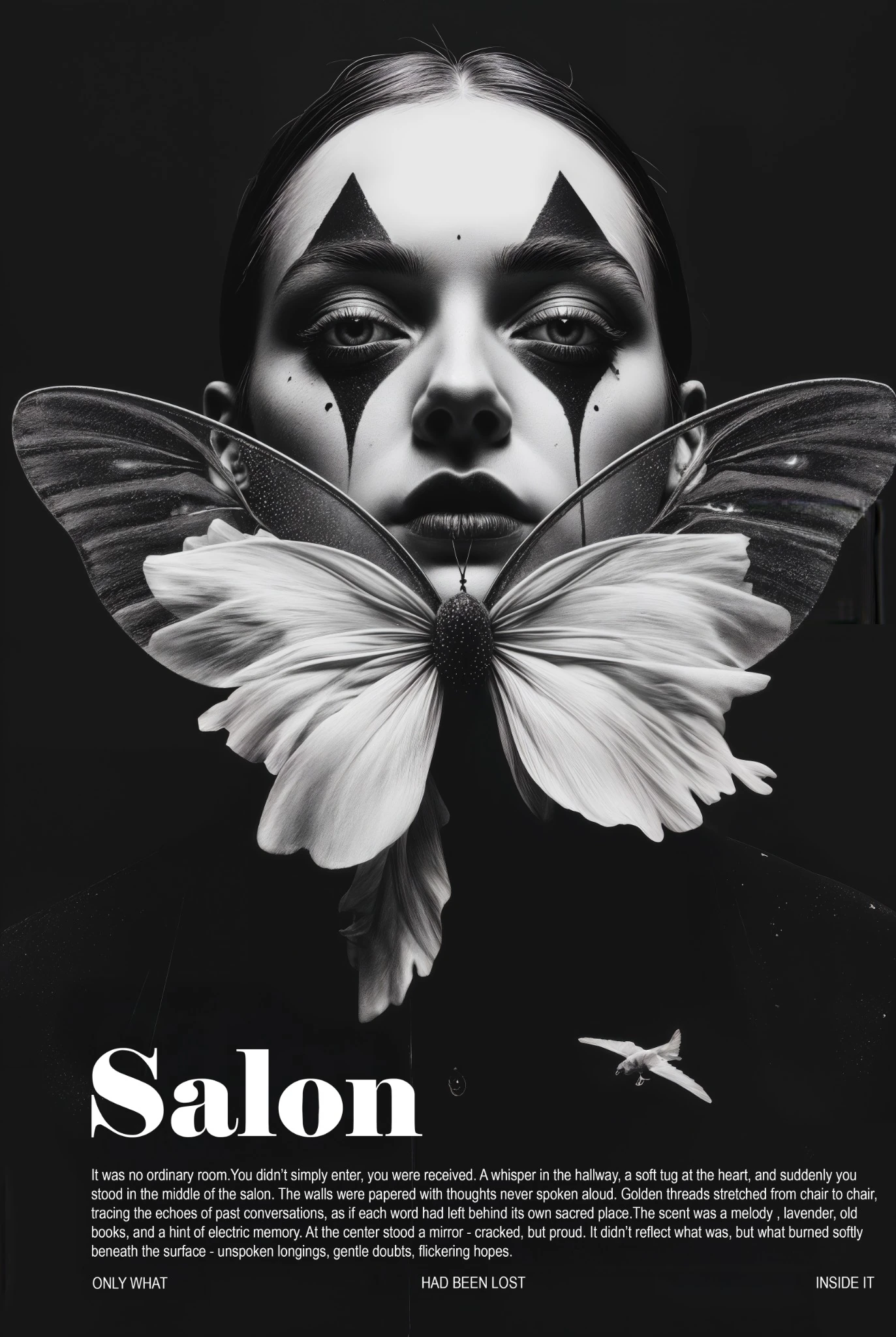
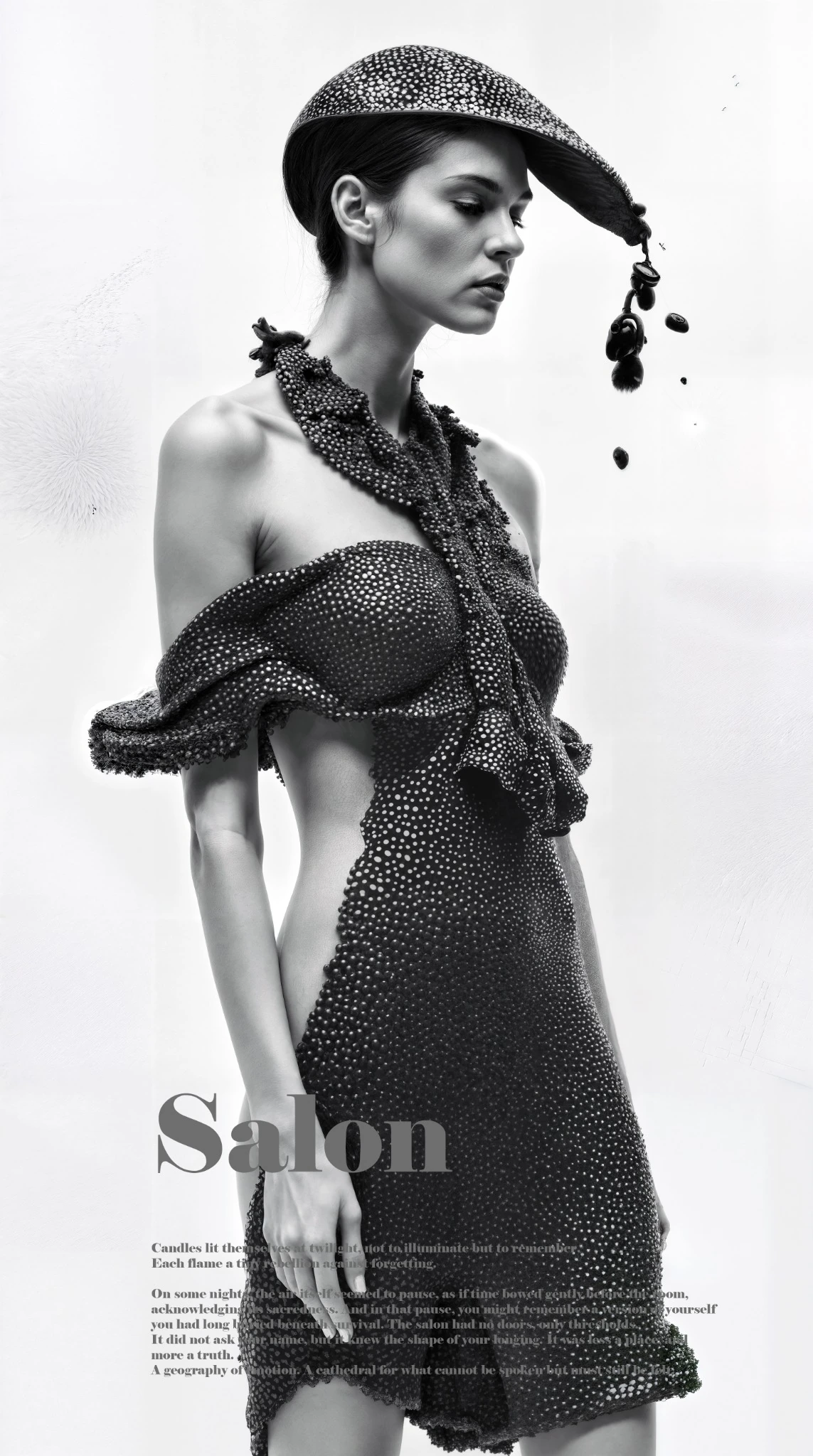
In Salon, the salon is less a physical room than a place of thought: a space where people are seen and observe one another, where appearance, expectation and belonging meet. Visibility can create opportunities, but it does not always mean freedom. It can also ask us to fit an image.
The gaze as invisible architecture
A performance assumes a gaze: someone who watches, judges, or whose expectations we may already have absorbed. We can become both the performer and the observer of our own selves.
The series explores the fragile line between self-expression and adaptation, between wanting to be seen and fearing real visibility. A role can limit us, but it can also be playful, chosen and freeing. The question is not only which role we play, but whether we still remember choosing it.